

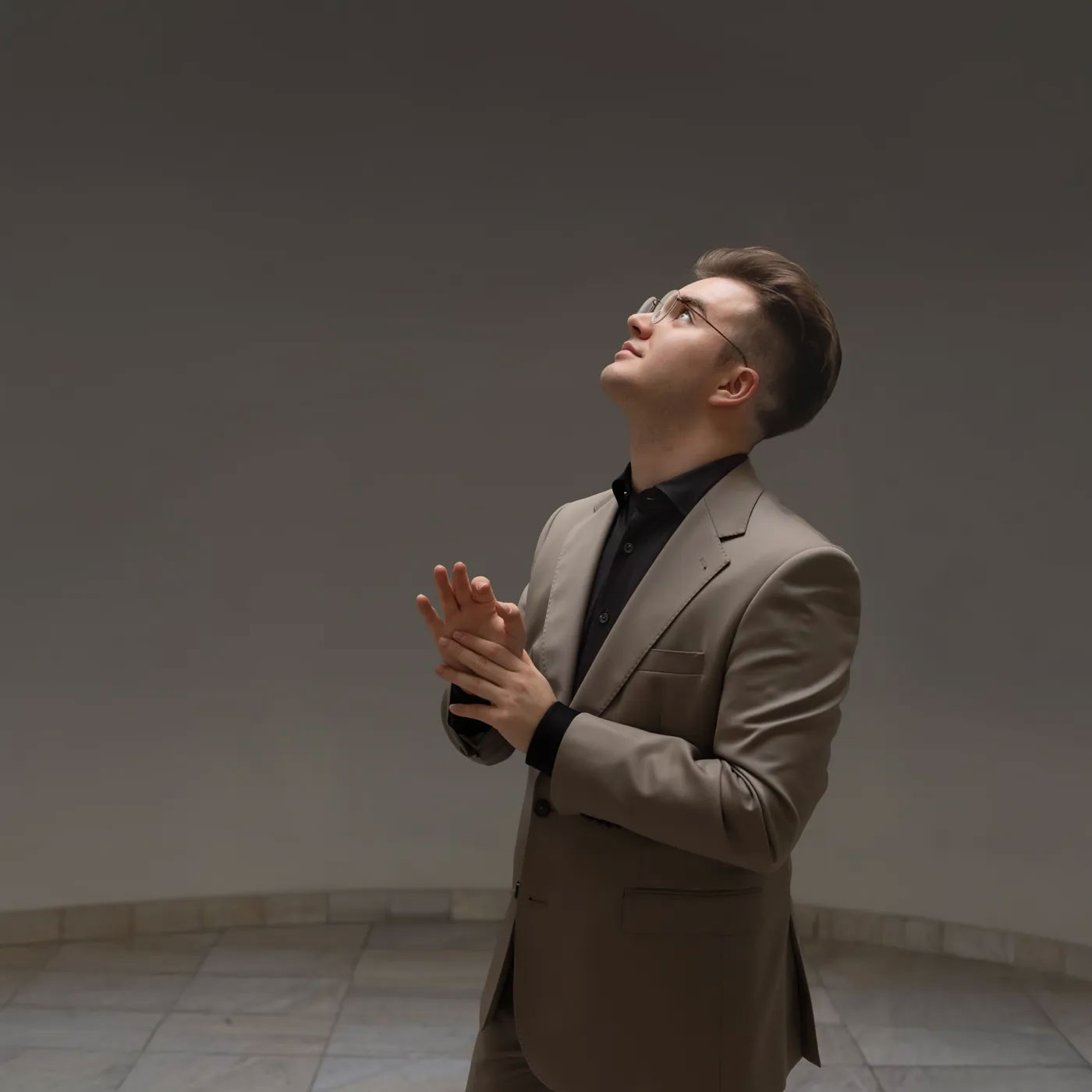
You have been recognized by piano competition juries that included renowned pianists and musicologists; the audiences love you; the orchestras love you, not to forget enthusiastic music critics. Whose opinion do you value most?
Everyone’s opinion is valuable as long as it is authentic and comes from a kind heart. However, the most important opinion is always that of the audience, because it is the audience that comes to our concerts; we play for them, and they decide whether they want to listen to us or not. We perform for them.
Your most recent success was at the Chopin Competition in Warsaw. How does it differ from other competitions besides being devoted to one composer?
Yes, this is the most important difference. The Chopin Competition in Warsaw is monographic, meaning that all participants perform compositions by a single composer. It makes the participation more challenging, but at the same time, easier. In Chopin’s one, coherent style, you need to find unity. But at the same time, you need to find a different approach to his early compositions than to his later ones, such as the Polonaise-Fantaisie in A-flat major, Op. 61. It comes from Chopin’s own development as a composer and from how the instrument evolved during his lifetime. His early compositions are strongly rooted in Classical tradition. Besides, the Competition creates a real media frenzy, and there is no other piano or music competition in the world that creates such an enormous interest among music lovers. But not only - the Competition has become an intrinsic part of the pop culture canon and often reaches people who do not attend classical music concerts or even listen to classical music. So, there is a unique energy and appeal to this event.
Does the Competition inspire people to stay with classical music, at least for a while?
I think so, although we should not generalize, of course. Still, many people stay engaged once they realize how deeply touched they were and how it helped them get away from everything. I have met people who never listened to classical music but watched the Competition on TV or the internet and decided to come to my concert, either in Poland or abroad. Such inspirations do happen, and that’s beautiful.
During the Competition, you often said it is not about “competing.” For me, competing is associated with adrenaline. If it’s lacking, is it helpful or just the opposite?
Adrenaline is always there. In my case, at least, it always comes back whenever I step on the stage and face the audience. It’s a kind of tension and focus. To be honest, I cannot see any advantages of a competition rivalry. After all, what do we compete for? How can you measure each pianist? We can talk about taste or trends. What you really need is lots of luck, and it is very often luck that decides who advances to the next round and who gets a prize. Of course, there are some objective parameters the jury members use to evaluate each pianist, but when we deal with the highest level of performance, we ultimately go beyond objective evaluation. Very often, it is after the competition that it becomes apparent what each pianist has to offer. During the competition, only our physical and mental condition and level of preparation at this particular moment are being verified.
When did you realize you wanted to devote your life to music and piano performance?
These are two separate topics, because I knew from very early on that I wanted to devote myself to music. This was when I became interested in music, around age four. However, treating the piano as a channel for conveying music came fairly late in my life. I must have been 12. Before, it was symphonic music and conducting that fascinated me, and I thought this would be the path I would take. But things took a different direction, and, at least for now, I am a pianist, not a conductor.
But sometimes you are still thinking about it.
Indeed. I would like, someday, to stand in front of an orchestra. That requires a different state of mind - the conductor does not create music but influences people and seeks to inspire them. To lead a group of people in such a way that they play what I internally hear sits deeply in my mind. But the day has only 24 hours, and there is no time for anything else but playing the piano. For now, I try to do my work, my passion - these are the same for me - the best I can.
What or who had an influence over your decision?
Everything resulted from my interest in piano music. I still remember the first time I heard Sergei Rachmaninov’s Third Piano Concerto in D minor, Op. 30. This experience had such a deep impact on me that I immediately realized that playing the piano and performing on the stage was what I wanted to do. It was a turning point. One cannot imagine anything more shocking for a young man who is not yet well acquainted with music or piano literature. So, everything started with the Third Piano Concerto, and a deep fascination and enchantment with the piano followed. I gradually began to discover and explore piano music.
Who shaped your sensitivity?
All my teachers, for sure - Małgorzata Borkowska, my first piano teacher, then Professor Paweł Zawadzki, and after I left Poland, two world-renowned pianists, Professor Nikolai Demidenko and Professor Konstantin Scherbakov, who is my current teacher in Zurich. Of course, my friends and family members, too. Our close ones shape us in an equally significant way as our music teachers. Also, generally speaking, attending concerts and opera performances molds your sensitivity, as well as your contact with the arts on the whole, such as reading or visiting museums. Every musician should basically draw from every moment of their life. It could be a walk, a trip, or an emotional state - sadness, sorrow, or joy - all of those things make us more receptive and deepen our understanding of humanity. And this is beautiful in all the arts. The more you travel, the more you learn the repertoire, and the more experience you gain, the more you start to form your own opinion and your own understanding of music and the realization of its purpose.
Which is what?
For me, it’s communication. First, you need to understand music through your own experience so that you can convey that to the audience, which, of course, can have their own understanding of it all. So, universality on the one hand, and subjective viewpoint on the other, which comes from our own perception.
As a boy, you used to sing in a choir, and opera music is especially close to you. Let’s talk a little about Chopin’s music and this aspect of his compositions. He paid very close attention to the melody and singing quality of his music.
Yes, without opera, without bel canto, we cannot talk about his music at all. Chopin was fascinated with opera and singing. His phrasing, his understanding of the melodic line, and horizontal thinking in music - they all, in fact, come from bel canto. So, to play Chopin “naturally,” you have to understand certain parameters, which are basic for singers. For example, the end of the phrase will never be louder than the middle or the beginning, because the singer runs out of breath. Or the highest note in a figuration cannot be accentuated, or the last note under the slur. This is especially evident in his cantilena compositions, such as nocturnes or études. On the other hand, Chopin always had the piano on his mind while composing, unlike Beethoven, who constantly thought about the orchestra even when composing for the piano. Or Brahms. I believe one cannot play Chopin convincingly without an understanding of vocal technique and opera.
Victor Lazarov praised you for your “genuine and unforced musicality, storytelling, a wide color palette, and broad dynamic range.” Others talk about your sensitivity and discipline. This looks like a picture of a complete pianist.
If you think, even for a moment, that you are a complete pianist, your career is over [laughs]. We all keep learning our whole lives. We all keep changing. As a 26-year-old pianist now, I will play one of Schumann’s sonatas differently than when I turn 50, and still different when I am 70, right? It will not be better or worse, just different. You are at a different stage of your life, have different experiences behind you, and have a different outlook on life and a different mindset. I set the bar very high, virtually higher and higher, and absolutely all respectable musicians, and those we want to listen to, learn their whole lives, and can never say they are complete. Art is so vast and the music literature so rich that you cannot embrace it all. Sergei Rachmaninov once said, “Music is enough for a lifetime - but a lifetime is not enough for music.”
In your interviews, you always sound very mature for your age. Where does this deep insight come from?
I don’t know if it’s maturity. I always try to be authentic. Some people like it, some don’t. I never put on any masks, and when I say something, it always comes from my heart, from what I believe in at that particular moment. This must be coming from my upbringing, from my home, where such values as honesty, truthfulness, and hard work were fundamental.
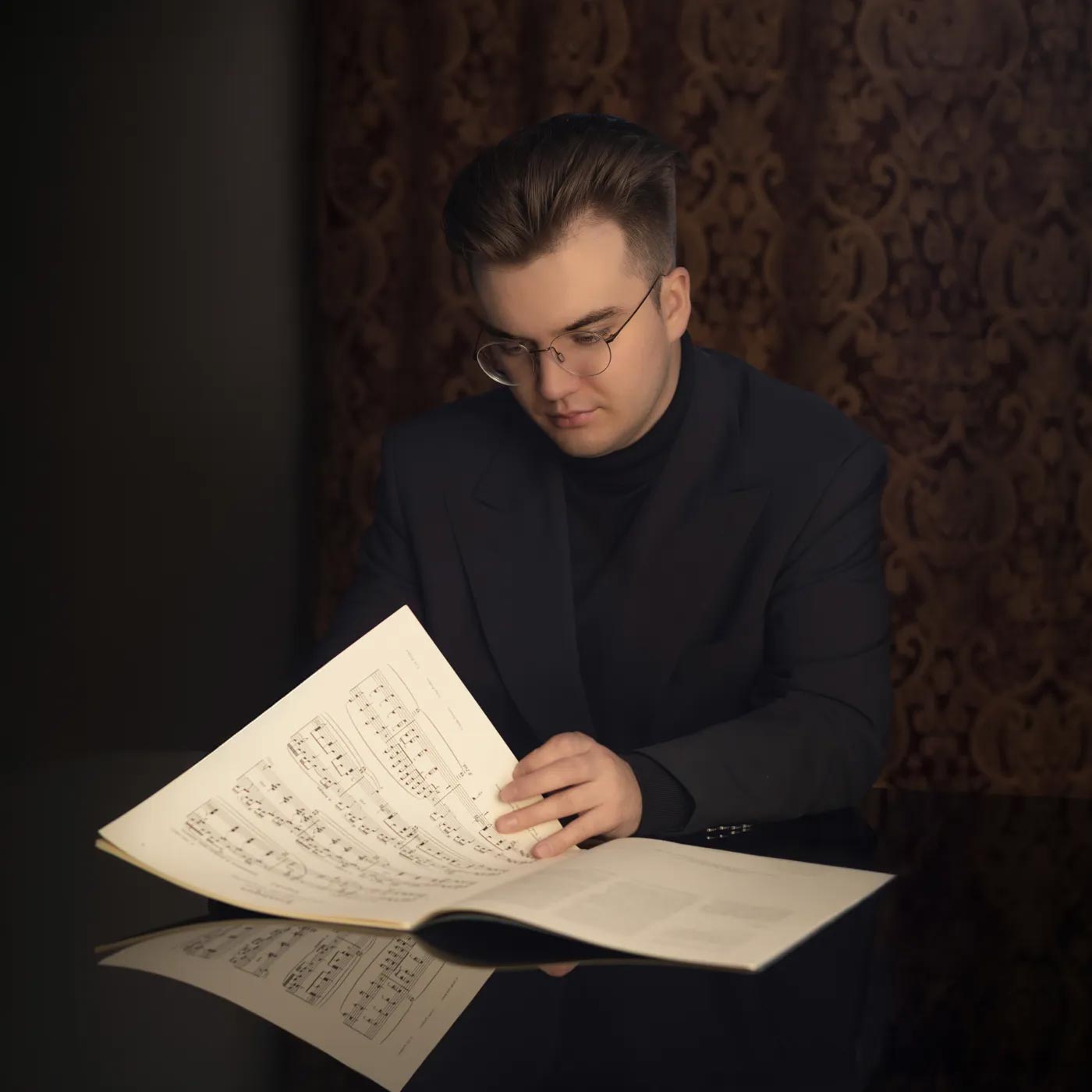
Piotr Alexewicz | Photo: Agnieszka Wira
In many photos, you are shown with sheet music. Is the notation a starting point for you while working on a particular composition?
This is a very controversial topic. Of course, notation is extremely important, but it was Józef Hofmann, I think, who posed a question whether we would play a particular piece differently if Chopin had not put forte or agitato or another notation here or there. And Hofmann proposes a hypothesis that we would not. Why? Because music, when taken emotionally and intuitively (at least by good musicians), speaks for itself. Most of these signs are only a suggestion to the performer. They do not change the context of the composition or its meaning. What the composer had in mind during the creative process should always be a starting point. Of course, you can analyze a rest or a slur, or the metronome mark, but if the musician does not understand the meaning behind a composition, and what is more important, cannot find something that is their own and “filter” it through their experience, the performance will be incomplete. It will be artificial. Some schools of thought claim that there is nothing more important than music notation, but for me, it is crucial to understand the meaning of the composition and relate to it. I do not mean an egocentric attitude here, that I play about myself, about my own dilemmas, but the moment you relate to the composition, the perspective changes, and the context becomes much broader. For example, if the pianist has never attended a funeral and has no idea what one feels in such a situation, how can they play Chopin’s “Marche funèbre” from his Sonata in B minor?
So, does it mean that if someone has never brushed against death or, in the case of other music, has never experienced a particular situation that is central to the composition, they can never play it well?
It’s hard to answer this question. Of course, there are some experiences you never want to go through. But I think we can play the piece well, but you have to engage a lot of emotional imagination, our vulnerability, and the sensitivity that comes from our sometimes completely different experiences. Our imagination is shaped by everything - by what we read, what we have seen, what art we have enjoyed, and who we have met - all of which enrich our lives and enhance our perspective and context.
Can music change the world for the better?
Music can be very powerful. But can it change the world? Unfortunately, not. It cannot stop the wars that are raging now. It can, however, make people happier; it can make them forget about adversities they encounter in their lives. I believe this is the power of music. When you give people a bit of beauty, a bit of goodness, and a moment of reflection during a concert, when we move them, we can then have an impact on people, and, through that, on the whole world.
Do you, as an artist, have a sense of responsibility to fulfill some kind of a mission?
Definitely. My duty is to bring music to the world, because this is what I can do best. It would be a sin not to take advantage of my gift. I am not saying this is easy. But when people come to me after the concert, and I see they are sincerely moved, it brings me great satisfaction, and I start to believe again that what I am doing is genuinely valuable. What can be more beautiful than making someone in the audience stop in time and be moved?
Does music fill your whole life?
Certainly, it does, to a great extent. Please remember that, for me, music is not just about sitting at the instrument, but also about listening to music or attending an opera performance. But it is crucial to have some sort of balance. Otherwise, you can go crazy. Nothing in excess is good for you. I love traveling, and whenever I have a free moment while touring, I always try to visit places and meet my friends, who are everywhere. My secret passion is airplanes, airports, and the whole airport infrastructure. This hobby gives me a break from music.